For anyone who has worked with the manuscripts from Medingen, a newly recognised book is never simply “another manuscript”. It is another voice from a community whose books travelled much further than their makers could ever have imagined. The late medieval Cistercian convent of Medingen, near Uelzen, is famous for its remarkable production of Latin and Middle Low German devotional manuscripts: prayer books, psalters, liturgical manuals, primers, and other books made by and for women religious. After the reform of 1479, manuscript-making became one of the defining devotional practices of the community; today, however, none of the medieval manuscripts is kept at Medingen itself. They are scattered across libraries and collections in Germany, the Netherlands, Britain, the United States, Denmark, and elsewhere. To this map we can now add Sweden. The current Medingen manuscript list does not yet include a Swedish witness, which makes the Lund manuscript especially exciting.
It is a particular pleasure to announce this find on the birthday of Professor Henrike Lähnemann, whose work has taught us to read the Medingen manuscripts not just as texts, but as crafted, handled, sung, corrected, reworked, and treasured objects. Her research on medieval manuscripts, text-image relations, Latin-vernacular writing, and the northern German convents has shaped the field; the Medingen prayer books and the letters of the nuns of Lüne remain central to her current work.
The newly identified manuscript is Lund University Library, Medeltidshandskrift 28, for which I propose the provisional siglum S-L, Lu1. It entered Lund University Library in 1704 as part of the Meck donation, after having belonged at the end of the seventeenth century to E. J. Meck.
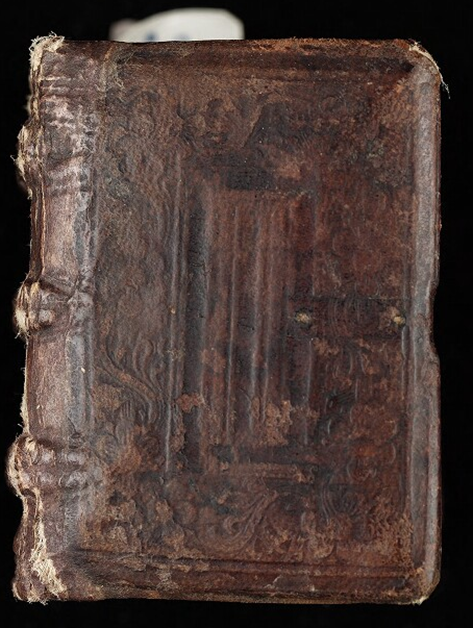
Figure 1: Lund, Lund University Library, Ms 28, front cover.
The book is tiny, but it is anything but slight. In its contemporary binding it measures 82 × 68 × 70 mm: almost a little devotional cube, made to be held, carried, opened, and used. The dark brown blind-tooled calfskin binding over rounded beech boards is contemporary with the manuscript (Fig. 1). It preserves traces of a metal fastening, a rounded spine with three double raised bands, sewing on three double cords laced through the boards, trimmed edges, and parchment pastedowns. A pencil note records that the book was rebacked in Stuttgart by Stefan Heiland in 1963. The decoration is modest, but carefully executed: four gilt pen-flourished initials, twenty-four larger red or blue initials with penwork, two smaller pen-flourished initials, and ten lombard initials with void white-pattern ornament (Fig. 2).
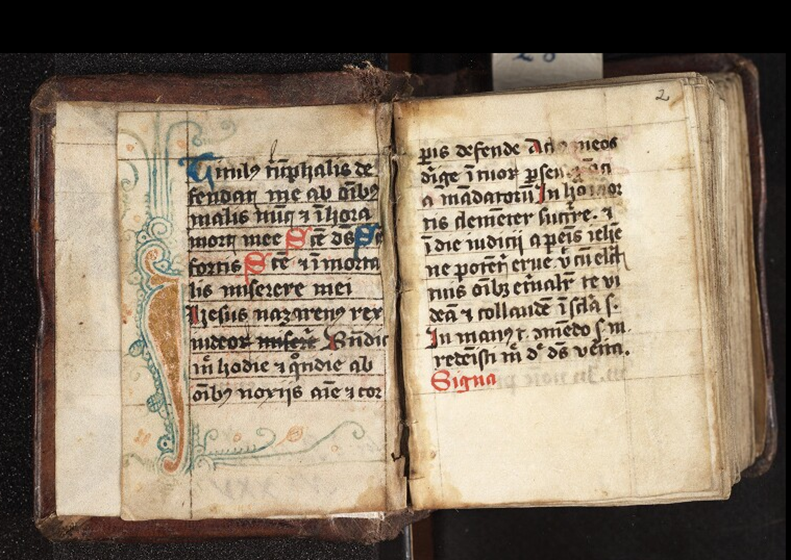
Figure 2: Lund, Lund University Library, Ms 28, 1v–2r.
Several features point towards Medingen. Some are material: the binding and blind tooling sit comfortably within the world of late medieval Medingen book production. Others are palaeographical and decorative: the script and initials resemble the recognisable “house style” that developed at Medingen after the reform of 1479. But the strongest evidence is devotional. This manuscript speaks the language of Medingen. On fols. 32v–33r, a prayer introduced by a rubric indicating that it is to be said in choir offers something like a compressed map of the convent’s heavenly community. It greets Christ as king, the Holy Cross, the Virgin Mary, the apostles James the Greater and John the Evangelist, Saint Maurice with his companions, Benedict and Bernard, and finally all the saints whose relics and images are venerated in the church and whose names are written in heaven (Fig. 3).
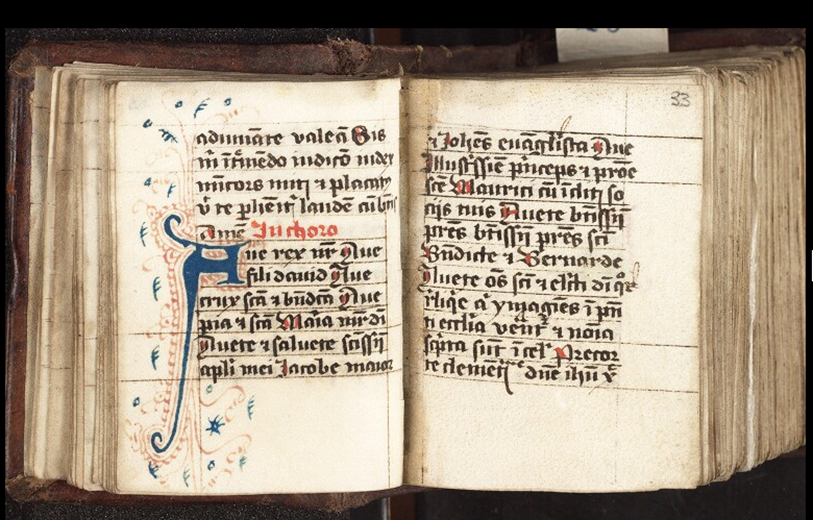
Figure 3: Lund, Lund University Library, Ms 28, 32v–33r.
This is a strikingly Medingen constellation. Saint Maurice was one of the central patrons of Medingen; Benedict and Bernard place the book firmly within a Cistercian devotional horizon; the reference to relics and images evokes a real church interior; and the appeal to personal patron apostles recalls a devotional pattern already known from the Medingen corpus.
And yet S-L, Lu1 is not simply “another Medingen prayer book”. That is what makes it especially interesting. Many of the best-known Medingen prayer books are Orationalia. This type of prayer book is organised around the liturgical year, combining Latin liturgy with Latin and Middle Low German prayers, meditations, hymns, and sometimes musical notation. The Lund manuscript, by contrast, appears to be a prayer book in a narrower sense. It contains, among other things, a devotional sequence of weekday prayers to saints. If this identification holds, it may represent a type of Medingen-associated prayer book not previously recognised in quite this form (Fig. 4).
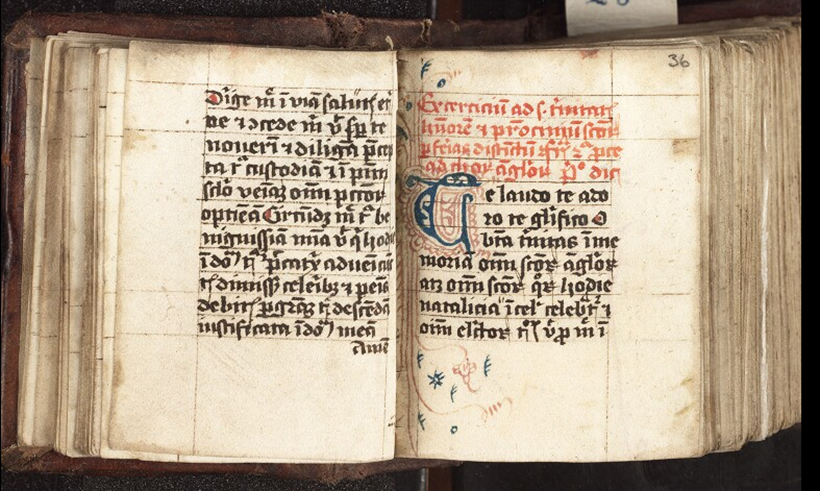
Figure 4: Lund, Lund University Library, Ms 28, 35v–36r.
This difference raises questions. Is the Lund manuscript a rare survivor of a broader range of Medingen devotional books? Or does it preserve traces of movement between convents, reform networks, and personal devotional identities?
One of the most intriguing clues is a prayer to Saint Alexander on fols. 56v–57v (Fig. 5). Alexander is not one of the central saints of the known Medingen devotional constellation. Yet here the speaker addresses him with remarkable intimacy, asking him to remember her as his “unworthy daughter” and as one “placed here in exile”: memento mei, indignae filiae tuae, hic in exilio positae.
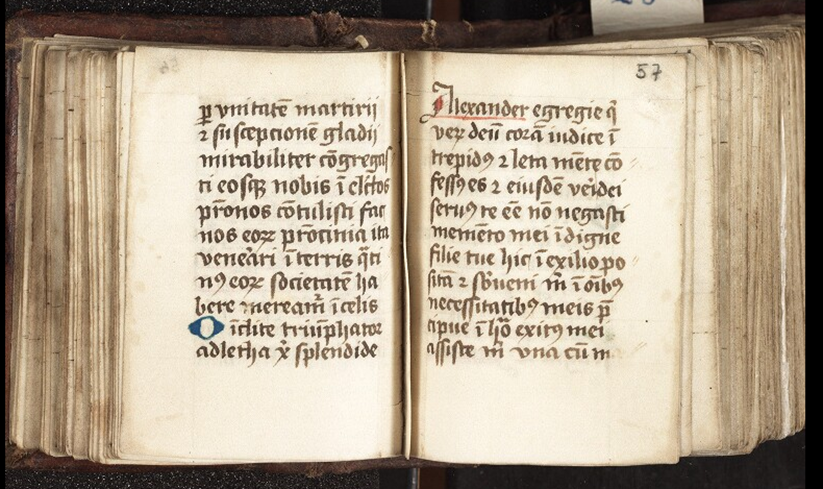
Figure 5: Lund, Lund University Library, Ms 28, 56v–57r.
“Exile” is, of course, a common Christian metaphor for earthly life. But in this context the phrase invites a more specific question. Could this prayer preserve the devotional memory of a woman who had come to Medingen from another convent?
Here Wienhausen becomes especially relevant. The former Cistercian convent of Wienhausen, near Celle, was dedicated to Saint Mary, Saint Alexander, and Saint Lawrence. It was one of the great women’s religious houses of late medieval northern Germany, famous for its buildings, wall paintings, textiles, devotional objects, and manuscript culture. A prayer in which the speaker calls herself Alexander’s daughter may therefore point not simply to a general saintly preference, but to a devotional allegiance associated with Wienhausen.
The possibility is historically plausible. Reform in the northern German women’s convents often involved the temporary or permanent presence of women from already reformed communities. Medingen’s own reform in 1479 was connected with Wienhausen: Lähnemann notes that after Wienhausen had undergone reform, Cistercian nuns from Wienhausen took part in the reform of their sister convent Medingen. One of the most important figures in this process was Margarete Puffen, a nun from Wienhausen who took over the leadership of Medingen in 1479 and became its first abbess fifteen years later, after Medingen was raised to abbey status in 1494.
The wider reform network is illuminated by the letters of the nuns of Lüne. Preserved in three large letter books, the Lüne correspondence contains nearly 1,800 letters copied by the nuns between about 1460 and 1550. These letters reveal enclosed convents as anything but isolated: they record friendships, negotiations, education, reform, grief, humour, and the practical work of sustaining religious life across institutional boundaries. At Lüne, for example, reform was implemented in 1481 with the help of the provost and seven nuns from the already reformed convent of Ebstorf; Sophia von Bodenteich, one of the Ebstorf nuns, replaced the former prioress Bertha Hoyer. Other Lüne letters remember women such as Gertrud von Eltzen, who came from Ebstorf to Lüne in the context of reform and later served there as sub-prioress.
Against this background, S-L, Lu1 becomes more than a small devotional book in a Swedish library. It may be a witness to the circulation of women, books, prayers, and patron saints across the reform networks of the Lüneburg convents. The prayer to Saint Alexander does not prove that the manuscript belonged to a Wienhausen nun. The book does not name its owner. In places it preserves only placeholders such as “N”, and once perhaps the initial “M”. But the Alexander prayer is suggestive: a woman praying within a Medingen devotional environment may have retained an affective bond to the heavenly patronage of another house.
The manuscript also appears to have been reworked. A preliminary examination suggests at least two textual layers. One layer is written in a rounder brown script, apparently without ruling; another is written in a darker, more angular Gothic hand, with ruling. The rounder brown script seems to be the earlier layer. The darker hand is younger and, in several places, appears to overwrite, insert, or replace earlier material.
This is especially visible in the sequence of prayers to holy virgins around fols. 78v–81r. A prayer to Saint Katherine ends on fol. 78v in the rounder brown hand. Then, in the darker angular hand, a prayer to Saint Ursula is inserted, followed by further prayers to Katherine and other saints. On fol. 81r the earlier layer resumes with a prayer to Saint Barbara (Fig. 6). At that point the later scribe appears to have been running out of space: the writing visibly diminishes in size in the upper part of the page. The manuscript is not only copied; it is negotiated.
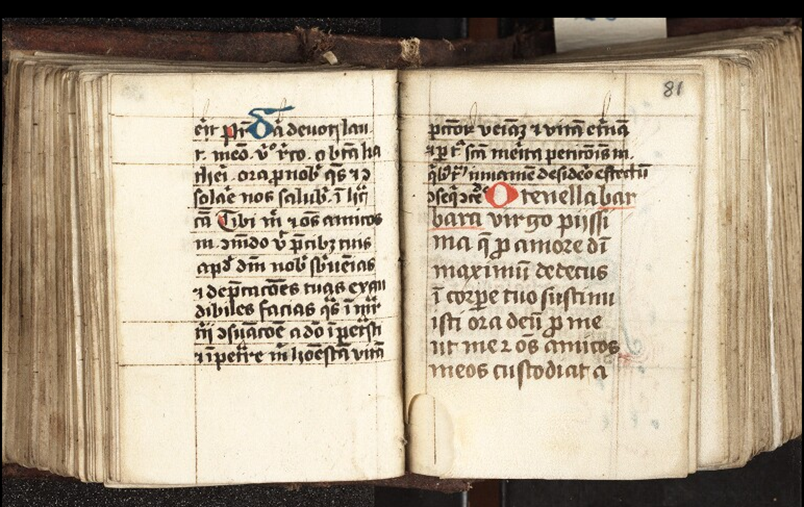
Figure 6: Lund, Lund University Library, Ms 28, 80v–81r.
The changes seem purposeful. A prayer to Saint Maurice immediately before the Alexander prayer appears to have been adjusted so that Maurice is more clearly presented as patron (fols. 54v–55v). This is not a wholesale change of devotional allegiance: Maurice was already addressed as a patron in the older layer. But the later hand sharpens the point. The manuscript seems to have been made more explicitly Medingen (Fig. 7).
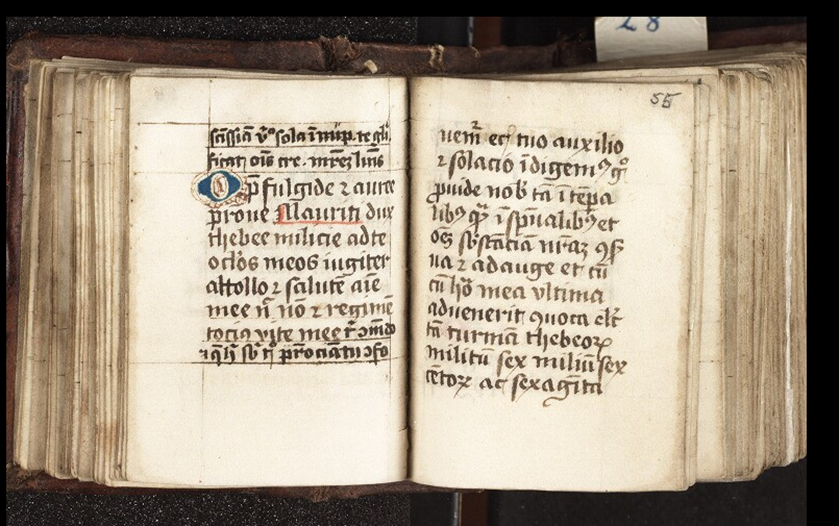
Figure 7: Lund, Lund University Library, Ms 28, 54v–55r.
Dating these interventions will require fuller codicological and palaeographical study. One clue is especially important: the younger layer refers to an abbess and therefore must postdate Medingen’s elevation to an abbey in 1494 (e.g. fol. 156v, Fig. 8). The prayers to Saint Anne near the end of the book also deserve attention. Around 1500, devotion to Saint Anne intensified widely across northern Europe; at Medingen, this devotion acquired architectural expression when Provost Bülow built a chapel dedicated to Saint Anne in 1507. Whether the Anne prayers in S-L, Lu1 testify directly to this local development, or more generally to the broader flourishing of Anne devotion around 1500, remains to be tested. In either case, the manuscript clearly participates in devotional currents characteristic of the decades around 1500. Saint Anne is addressed in strikingly exalted terms: “O most glorious mother, Saint Anne, who now reigns with your son and your daughter in heavenly glory.”
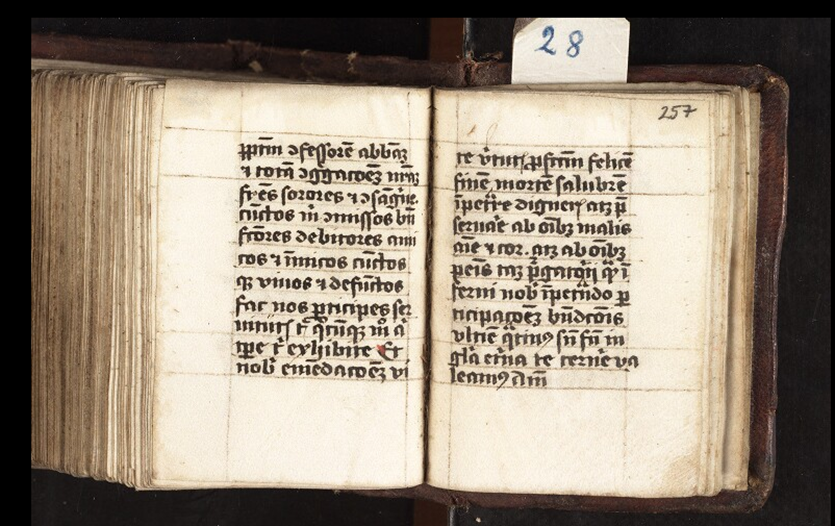
Figure 8: Lund, Lund University Library, Ms 28, 254v–255r.
The result is a manuscript that may not only have been made for devotion, but remade for devotional belonging. Its revisions range from altered words to inserted prayers and perhaps larger structural adjustments. They may represent the adaptation of an earlier book to Medingen use. They may also preserve the devotional memory of a woman whose spiritual identity connected more than one convent. These hypotheses need to be tested against the manuscript as a whole and against comparable Medingen, Wienhausen, and Lüneburg convent books.
For now, S-L, Lu1 offers a beautiful birthday gift: a new manuscript, a new country on the Medingen map, and a new set of questions. It reminds us that Medingen manuscripts are not static witnesses. They are mobile objects: copied, bound, prayed with, corrected, reoriented, dispersed, collected, digitised, and rediscovered. As Henrike Lähnemann has argued for the Medingen prayer books more broadly, their meanings changed over time: devotional aids became antiquarian objects, philological evidence, cultural witnesses, and now digital images open to new readers.
To find a Medingen prayer book in Lund is therefore not simply to extend a list. It is to recover another trace of the intellectual, spiritual, and material labour of late medieval religious women. It is also a fitting tribute to a scholar whose work has taught us how to listen to such books: not only as texts, but as crafted, handled, altered, sung, and loved objects.
Happy birthday, Henrike — and welcome, S-L, Lu1.
Suggested further reading
Achten, Gerard. “De Gebedenboeken van de Cistercienserinnenkloosters Medingen en Wienhausen.” Miscellanea Neerlandica 3 (1987): 173–188.
Hascher-Burger, Ulrike, and Henrike Lähnemann. Liturgie und Reform im Kloster Medingen: Edition und Untersuchung des Propst-Handbuchs Oxford, Bodleian Library, MS. Lat. liturg. e. 18. Tübingen: Mohr Siebeck, 2013.
Lähnemann, Henrike. “Bilingual Devotion in Northern Germany: Prayer Books from the Lüneburg Convents.” In A Companion to Mysticism and Devotion in Northern Germany in the Late Middle Ages, ed. Elizabeth Andersen, Henrike Lähnemann, and Anne Simon, 317–341. Leiden: Brill, 2014.
Lähnemann, Henrike. “Saluta apostolum tuum: Apostelverehrung in Kloster Medingen.” In Weltbild und Lebenswirklichkeit in den Lüneburger Klöstern, ed. Wolfgang Brandis and Hans-Walter Stork, 41–64. Berlin: Lukas, 2015.
Lähnemann, Henrike. “From Devotional Aids to Antiquarian Objects: The Prayer Books of Medingen.” In Reading Books and Prints as Cultural Objects, ed. Evanghelia Stead, 33–55. Cham: Palgrave Macmillan, 2018.
Lähnemann, Henrike, and Eva Schlotheuber. The Life of Nuns: Love, Politics, and Religion in Medieval German Convents. Cambridge: Open Book Publishers, 2024.
Schlotheuber, Eva, and Henrike Lähnemann, eds. Netzwerke der Nonnen: Kritische Edition der Briefsammlung der Lüner Benediktinerinnen. Tübingen: Mohr Siebeck, 2024/25.