In March 2026, I had the opportunity to spend a week in Copenhagen as part of a Short-Term Scientific Mission at the Royal Danish Library. The aim of this research stay was to work on a group of Middle Low German prayer books that have long been known to scholarship—first described by Conrad Borchling around 1900—but have rarely been studied in detail since. Many of these manuscripts are still not digitised, and so they remain, in a very literal sense, books that can only truly be encountered in the reading room.
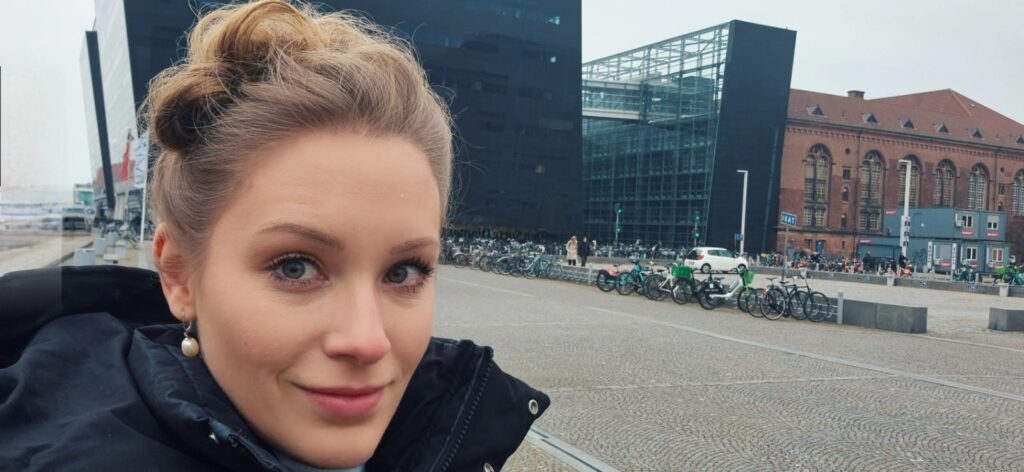
Among the Copenhagen holdings is a remarkable group of manuscripts connected to women’s religious communities, including several with links to the Cistercian convent of Medingen. But alongside these broader research questions, the week in Copenhagen was shaped by a more personal experience: the first encounter with a manuscript that has long stood at the centre of my work, but which I had never seen in person before.
A manuscript long known—but never seen
Among the manuscripts I had come to study, one stood out in particular: the Medingen Easter prayer book GKS 3452 8°, known in my work as K4. This small manuscript, written in 1408 by the Medingen nun Cecilia de Monte, is the earliest securely datable book from the Medingen convent and a central point of reference for understanding its early devotional culture.
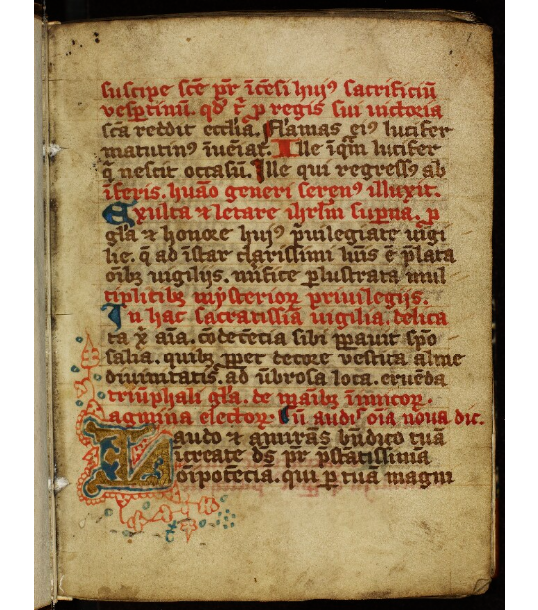
For a long time, K4 had been a constant presence in my research. I had worked with its texts, followed its structure, and thought with it about questions of liturgy, devotion, and manuscript use. It had become, in a sense, familiar—an object known through description, transcription, and scholarly discussion.
And yet, until this visit, I had never seen it in person.
There is a particular tension in this kind of familiarity at a distance. The manuscript is intellectually close, but materially absent. It exists as a concept, as a set of references, as something one cites—but not yet as something one encounters.
In the reading room
Seeing K4 for the first time in the Royal Danish Library brought this difference into focus immediately.
What struck me first was not its status, but its scale. It is a small, modest book, without the visual richness that often draws attention in medieval manuscripts. It does not announce itself. Instead, it invites closer looking. And it is in that closer looking that the manuscript begins to unfold. The surface of the parchment, the density of the script, the slight irregularities of the hand, the changes in ink—these details are difficult to grasp in description, but immediately present when the book lies open before you. The manuscript reveals itself not as a fixed object, but as something that has been handled, read, and worked on over time.
This is particularly visible in K4. The manuscript preserves traces of revision: different hands, darker and lighter inks, and signs of scraping and rewriting. These layers point to a continued engagement with the book, long after its initial copying in 1408.
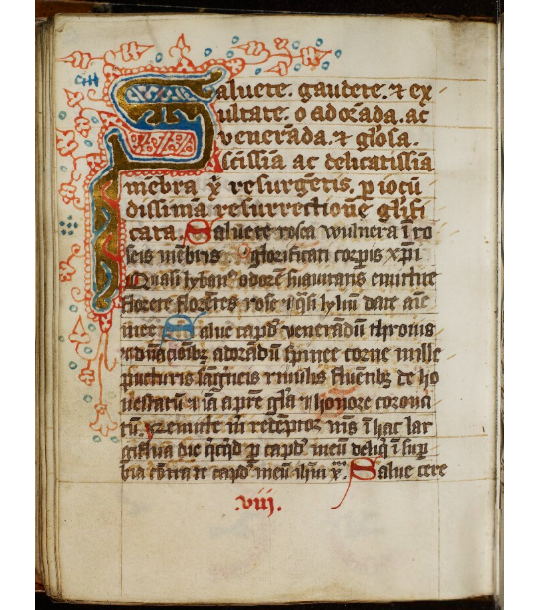
To see these traces directly is to recognise the manuscript as something temporal—an object that carries within itself more than one moment of use. It is not only a witness to its origin, but to its continued life within the convent.
Copenhagen and the afterlife of Medingen’s books
At the same time, the encounter with K4 in Copenhagen also brings into view a different kind of history.
The manuscript was written in the convent of Medingen, near Lüneburg. And yet, today, it is preserved in the Royal Danish Library, far from its place of origin. It forms part of a wider group of manuscripts that have travelled across regions and now belong to new institutional contexts.
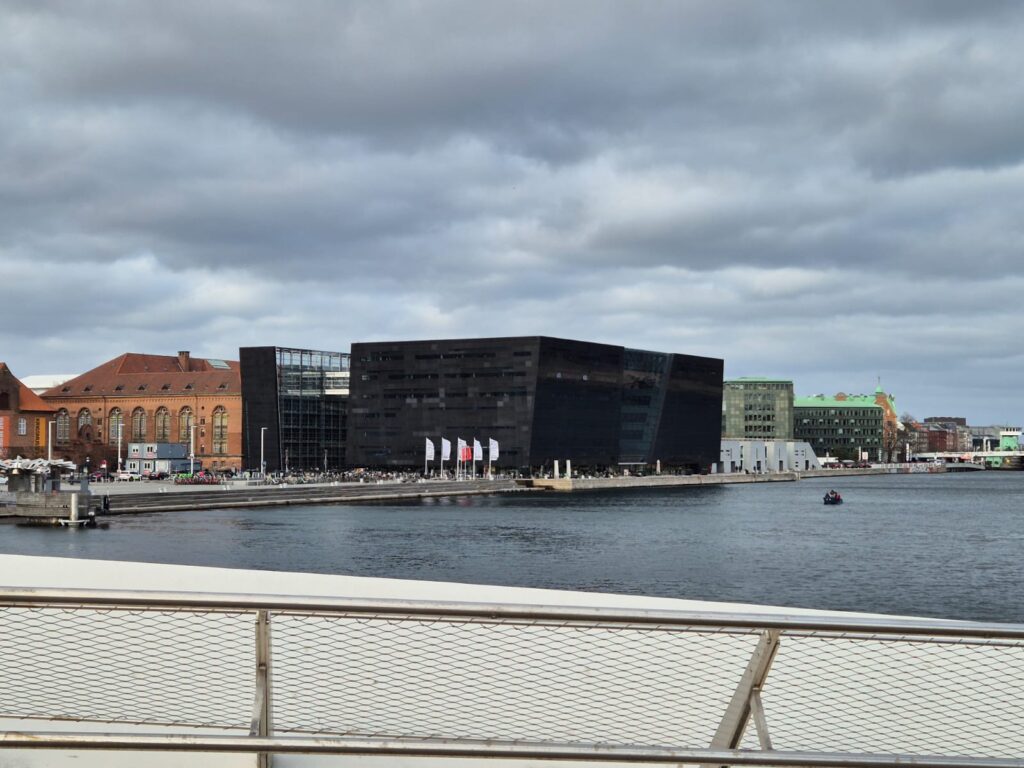
Working with these books in Copenhagen makes this displacement tangible. It reminds us that the history of a manuscript does not end with its production. It continues through its movement, its preservation, and its recontextualisation.
Copenhagen, in this sense, is not simply a place where these manuscripts are stored. It is a place where their histories intersect: where the devotional culture of a northern German convent becomes part of a broader northern European story.
A week of research—and one moment of encounter
The week in Copenhagen was filled with manuscript work: documenting codicological features, tracing provenance, and comparing a range of devotional books connected to women’s religious communities.It also included the opportunity to present my research and to exchange ideas with colleagues working on related questions of language, transmission, and manuscript culture. These conversations will continue to shape the development of my work.
Research is not only built on analysis and interpretation. It is also shaped by such moments of encounter.