Yesterday I swapped my desk in Hamburg for a snowy train journey to Kloster Wienhausen. At minus five degrees the landscape between Hamburg and Celle was white and strangely quiet; when I arrived, the convent buildings and church were dusted with snow and looked almost unreal, like a model of themselves.
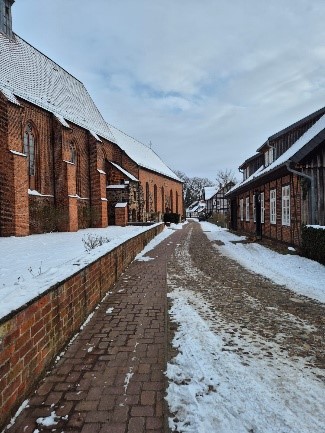
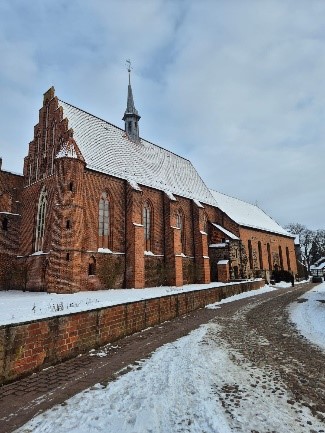
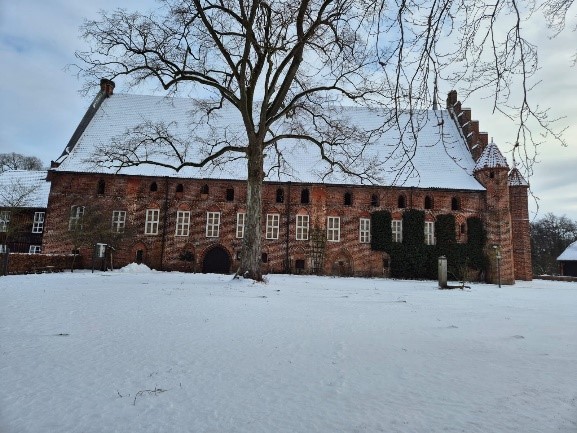
Figures 1–3: Kloster Wienhausen in a tranquil winter landscape. © Carolin Gluchowski (mit Dank für die Genehmigung einer Veröffentlichung an das Kloster Wienhausen)
Inside, by contrast, everything felt very alive. I was warmly welcomed at the convent and had the pleasure of meeting art historian Dr Jörg Richter from the Klosterkammer Hannover and the Wienhausen abbess, Simone Dannenfeld. Dr Richter had brought out a group of fragile paper reliefs from the depot and laid them out for me in the seminar room, where I could look at them closely, and he then guided me through the small on-site exhibition that displays some of the most curious finds from the famous Fund vom Nonnenchor – the cache of objects discovered under the nuns’ choir in the 1950s.
Little Images, Long Distances
The nuns of the Lüneburg women’s convents – Ebstorf, Lüne, Medingen, Isenhagen, Walsrode, and Wienhausen – did not live in isolation. They were part of a dense network of exchange that is currently being investigated in the project The Nuns’ Network, led by Henrike Lähnemann and Eva Schlotheuber: letters, prayer texts, gifts, and, crucially, small devotional images travelled back and forth between the houses.
These images display a variety of topics: a Holy Face of Christ, the Risen Christ, the Five Wounds, a Christ Child nestled in a heart, or a tender Marian image. During my visit, Dr Richter also showed me examples of paper reliefs that were likely hung on the wall, while others seem to have been placed between the pages of prayer books. Often made on paper or parchment and sometimes hand-coloured, they circulated above all on special occasions – professions and coronations of nuns, New Year and major feasts, or moments of illness and bereavement.
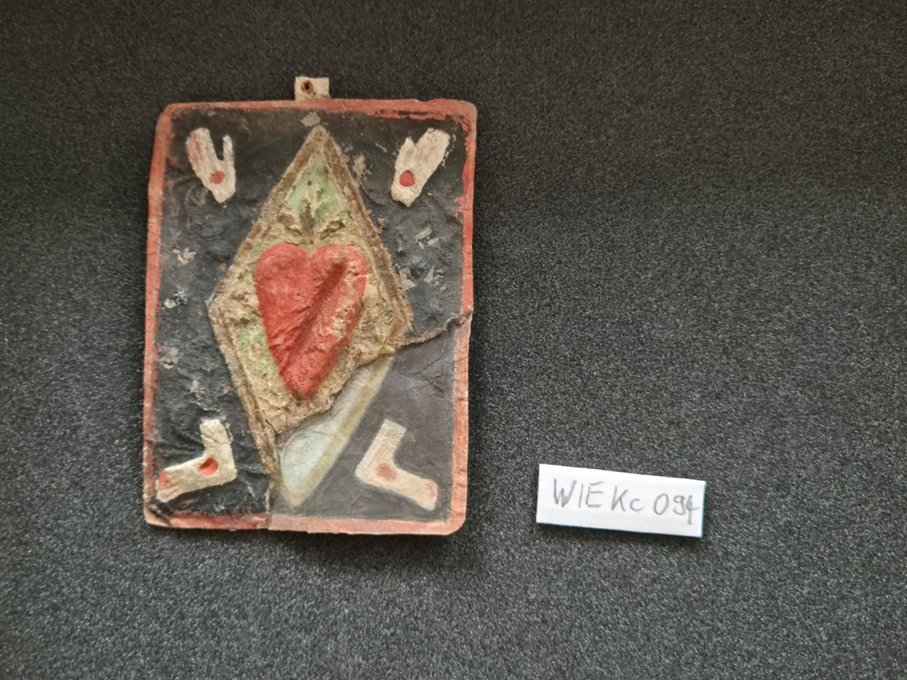
Figure 4: The Five Wounds of Christ, paper relief, 9.5 × 7.2 cm, 15th century (?), with added strip at the upper edge for hanging, Kloster Wienhausen, WIE Kc 094. © Carolin Gluchowski (mit Dank für die Genehmigung einer Veröffentlichung an das Kloster Wienhausen)
In the letters from Kloster Lüne we repeatedly see these images being sent as gifts: “a small sheet with a saint image”, “a little leaf with the blessed heart of our Saviour”, “a painted Holy Face”. The nearly 1,800 letters preserved in Lüne’s letter books show how carefully these objects were chosen and how precisely their recipients were instructed to use them – when to look at them, what prayers to say, and what kinds of comfort or spiritual “sweetness” they should expect.
This is one of the key arguments of my current research: that these small images did not work on their own. They became devotional agents only when they travelled together with letters that explained how they were to be seen and what they were meant to do. Through this constant traffic of words and images, the Lüneburg convents created and maintained a shared devotional culture that stretched across cloister walls.
The “Nuns’ Dust” of Wienhausen
Most of the devotional images that survive today come from the so-called Fund vom Nonnenchor. During restoration work in the nuns’ choir in 1953, builders discovered a large deposit of objects beneath the choir stalls: tiny devotional images, small booklets with prayers, pilgrim badges, fragments of textiles, rosary beads, even a pair of very early wooden spectacles.
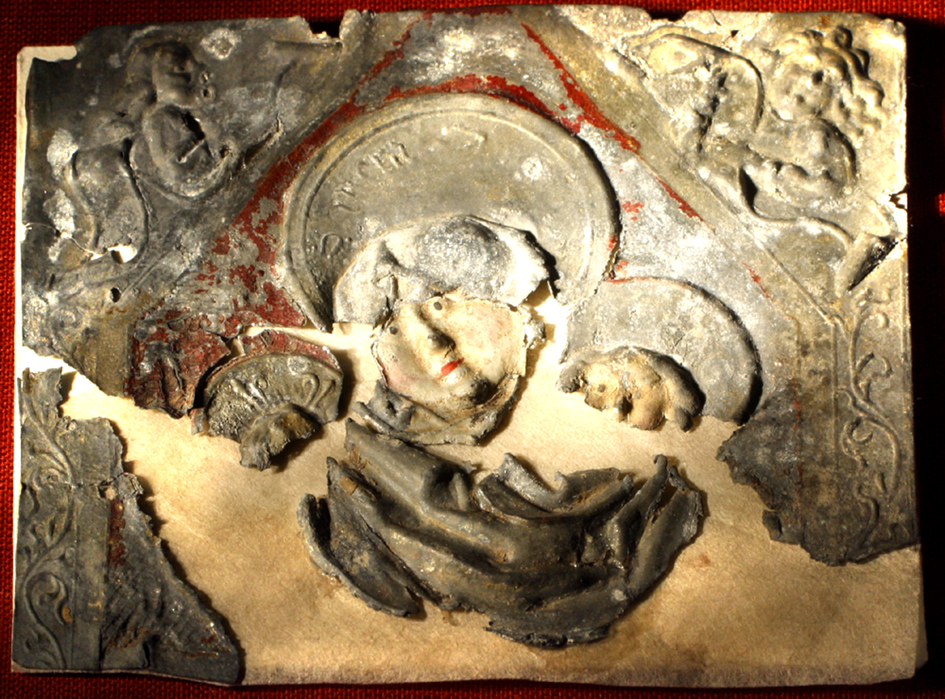
Figure 5: Fragments of a small devotional plaque of Saint Anne with the Virgin and Child (Anna Selbdritt), painted tin, first half of the 16th century, from Kloster Wienhausen (DI 76, no. 112, Deutsche Inschriften Online). © Carolin Gluchowski (mit Dank für die Genehmigung einer Veröffentlichung an das Kloster Wienhausen)
Taken together, these pieces form a kind of time capsule of female piety from roughly the thirteenth to the seventeenth century. Among them are exactly the kind of small devotional images that also appear in the Lüne letters: miniatures on parchment, woodcuts, metalcuts, and – the focus of my visit yesterday – small paper reliefs.
What Are Paper Reliefs?
The paper reliefs Dr Richter showed me are among the most striking objects from Wienhausen. At first glance they look like small, slightly three-dimensional objects: delicate sheets of paper with a raised image of a saint, Christ, or the Virgin. The relief was created by pressing damp paper into a carved or cast mould so that the design stood out in low relief; the surface could then be painted or gilded to catch the light.
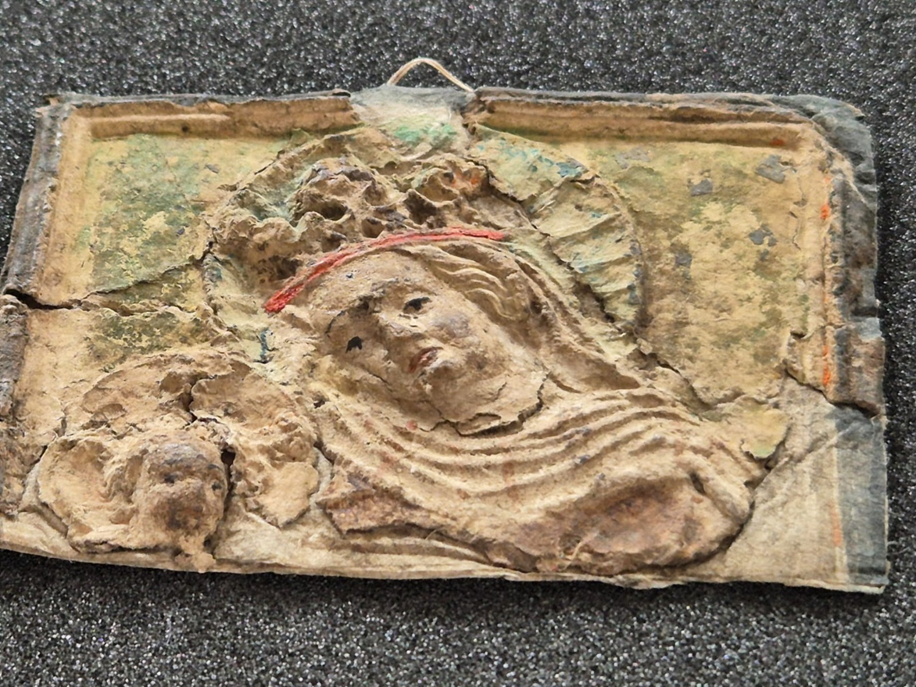
Figure 6: Virgin and Child, paper relief (fragment), mid-15th century (?), 6.7 × 9.3 cm, Kloster Wienhausen, WIE Kc 095. © Carolin Gluchowski (mit Dank für die Genehmigung einer Veröffentlichung an das Kloster Wienhausen)
These were comparatively inexpensive images – lighter and easier to produce in numbers than carved wood or metal, but more tactile than a simple flat print. Precisely because they were cheap and portable, they were perfect for the kind of everyday, intimate devotion practised by nuns in the choir stalls or in their personal cells.
The Wienhausen paper reliefs survive in exceptionally good condition: the folds are crisp, the surfaces often only gently worn, the faces still legible. Standing in the seminar room, looking closely, you can still see how carefully they were made: tiny punched dots to indicate a halo, a fold of drapery picked out in paint, the soft rise and fall of the relief when you tilt the sheet against the light.
And yet we still know surprisingly little about them. Did the nuns buy them from travelling vendors, receive them from urban patrons, or even make some of them in the convent itself? Were specific reliefs tied to particular feast days or life events, or did they circulate more freely? How often did such paper reliefs travel on the same routes as the other small images we see in the Lüne correspondence? These are questions that still need to be answered.
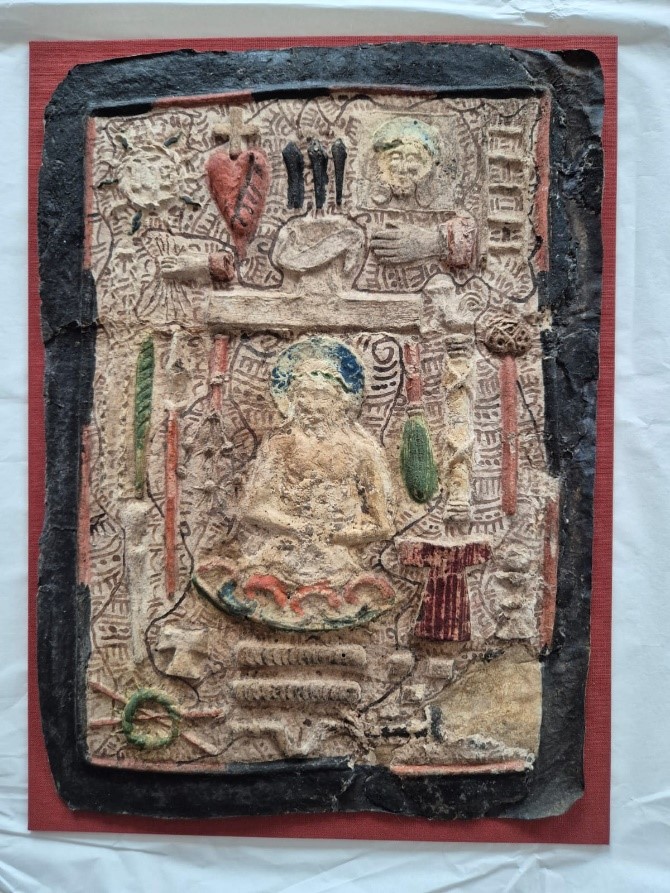
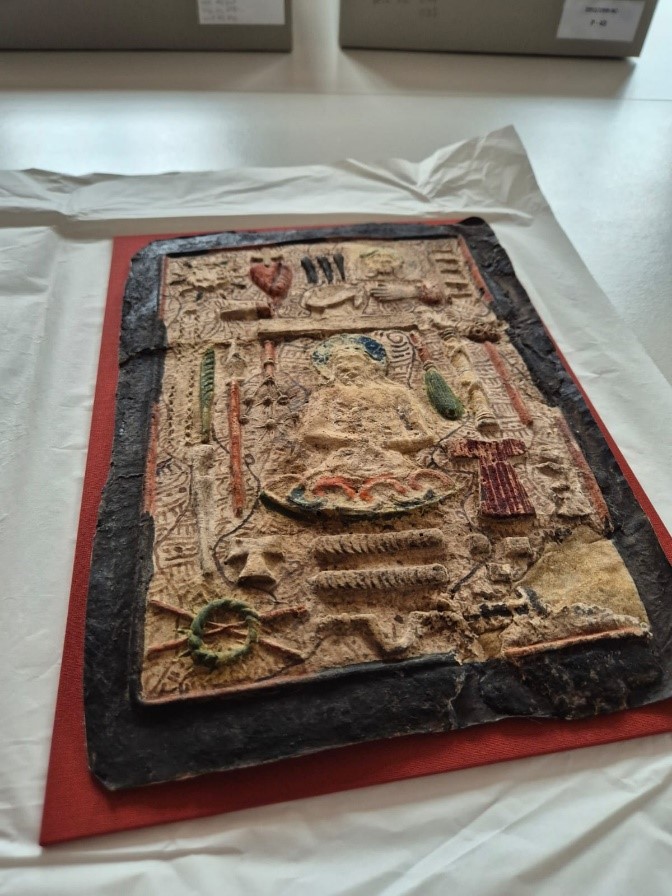
Figures 7–8:Man of Sorrows with the Instruments of the Passion, paper relief, 28.5 × 20.7 cm, c. 1500 (?), Kloster Wienhausen, WIE Kc 035. © Carolin Gluchowski (mit Dank für die Genehmigung einer Veröffentlichung an das Kloster Wienhausen)
Work in Progress – and a Glimpse Ahead
My day at Wienhausen left me with as many questions as answers. How did the nuns decide which images to send to whom? How did paper reliefs fit into the wider mix of parchment miniatures, woodcuts, and handwritten prayer sheets? And how did these modest, often home-made looking objects come to carry so much emotional and theological weight?
These are some of the questions I will continue to explore, and which I will also take with me later this month to the meeting of the Renaissance Society of America in San Francisco, where I will present a paper on the exchange of devotional images between the convent of Lüne and its urban surroundings.
For now, though, I am still thinking of that snowy courtyard at Wienhausen, the quiet of the nuns’ choir, and the fragile sheets of paper in the depot – objects that once moved between hands, houses, and hearts, and that still have a great deal to tell us about how medieval women saw, prayed, and stayed connected.